


Twelve minutes. That’s how long I once stood at an off-site lot near OAK watching the shuttle I just missed pull away, with a boarding pass in my hand and a TSA line I couldn’t see yet. The parking itself took four minutes. The waiting took longer than the drive to the airport would have.
People obsess over the price they pay for oak airport parking and barely think about the shuttle loop that decides whether they make their flight. That’s backward. The rate is a fixed number you can compare in ten seconds. The shuttle is a moving variable that depends on the day, the traffic on Hegenberger Road, and how many cars arrived in the same ten minute window as yours.
So treat this as a timing problem, not a shopping problem. You can still save money. You just have to be honest about when the clock actually starts.
What the airport’s own timing advice leaves out
Every airline and every airport tells you to arrive two hours before a domestic departure and three before an international one. That guidance comes from agencies like the Transportation Security Administration, and it’s good advice as far as it goes. What it doesn’t answer is where your car is at the moment those two hours begin.
If you drive straight into a garage at the terminal and walk to security, the two hour window is yours to spend inside the building. If you park off-site, part of that window gets eaten before you ever see a check-in desk. Here’s how I think about it: your two hour cushion starts when your car reaches a stopped position, not when you lock it. The shuttle ride, the drop-off loop, the walk to security, all of it comes after that cushion has started shrinking.
That distinction sounds small until you’ve done it wrong once. Then it reorganizes your whole departure morning.
The three-leg model I use to set a leaving time
I’ve started breaking the pre-flight morning into three separate legs, each with its own buffer. I call it the three-leg departure: the drive in, the lot handoff, and the shuttle ride. You don’t need an app for it. You need a pad of paper and one honest estimate per leg.
- Drive in. Add your normal commute plus a fifteen minute slack for bridge traffic or a wrong turn off the freeway exit.
- Lot handoff. Budget ten minutes at a busy lot, five at a quiet one. You’re parking, handing over keys if it’s valet, pulling out luggage, and finding the shuttle stand.
- Shuttle ride. Ask the lot how often the shuttle runs before you book, not after. A shuttle that comes every ten minutes and a shuttle that comes every twenty feel like different products.
Now compare that total to your departure time. If the sum lands you inside the terminal earlier than the airport’s recommended arrival window, your leaving time is right. If it doesn’t, you need to leave earlier or pick a lot closer to the terminal. There’s no third option, and no amount of clever booking software fixes a departure time that was already too late.
Why a flat rate still beats the garage on short trips
Conventional wisdom says daily parking wins for short trips and off-site lots win for long ones. I’ve mostly found the opposite to be true near OAK, and here’s why. A two day trip in a terminal garage usually comes with a daily maximum that stings for such a short stay, and you’re paying it for the convenience of walking. An off-site lot charges a flat daily rate and shuttles you in. The shuttle time you spend is short enough that it barely registers against a garage bill.
Where the math flips is the long trip. Two weeks of daily garage rates is real money, and a flat off-site rate over fourteen days is a much smaller number. Either way, compare totals, not the per day figure on a sign. The per day number is the shiniest thing in the parking adjacent to the terminal and it’s almost never the number you’ll actually pay.
Holiday weeks break your normal assumptions
Thanksgiving morning is not a normal morning. Neither is the Friday before a long weekend. Trade associations and the federal agencies that track airline travel all point to the same pattern: holiday weeks are the busiest the system gets. That matters for parking in a way people underestimate. More cars arrive in the same hour, so the shuttle fills faster and loops take longer. The lot’s staffing is stretched, so the handoff eats more of your pad. Nothing is broken. It’s just heavier.
When I’m traveling on one of those days, I add a full thirty minutes to the shuttle leg and I accept that the first shuttle may leave without me. Plan for the second one and you’ll almost never be stressed. Plan for the first one and you’ll spend the ride checking the time.
Where OAK’s layout gives you a break
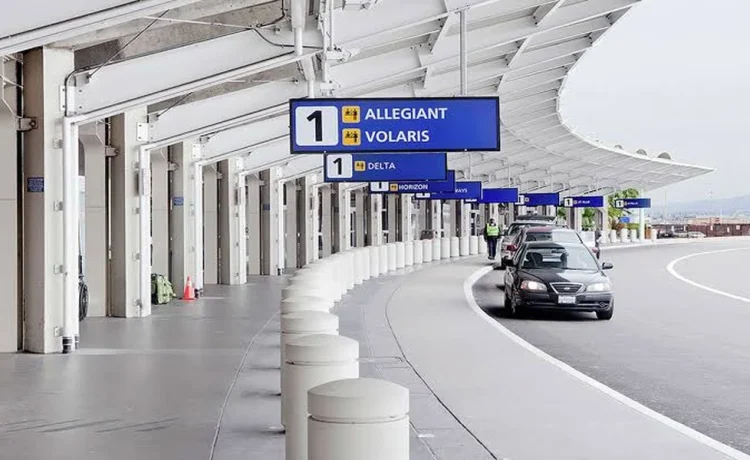
Oakland’s airport is smaller than most people expect, and that’s a gift on departure morning. A single terminal means you’re not guessing which building to be dropped at, and the distance from curb to gate is walkable in a couple of minutes once you’re inside. Official overviews of the airport, like the ones published by Oakland International Airport, describe the terminal layout simply because there isn’t much to describe. Compare that to a multi terminal hub where the shuttle drops you at the wrong door and the walk alone eats ten minutes.
Where OAK doesn’t give you a break is traffic on the approach. The airport corridor bottlenecks badly during commute hours, and that’s true whether you’re arriving in your own car or riding in a shared shuttle. If your flight leaves in the morning peak, your drive leg needs the extra slack whether or not the shuttle is efficient. I’d rather sit in a lot for fifteen extra minutes than watch the freeway creep while my boarding group fills.
A checklist for the night before
Run this in the kitchen, with coffee, the evening before you fly. It takes about four minutes and it catches nearly every way people miss flights from a parking standpoint.
- Confirm your reservation time matches the moment you plan to drive in, not the moment you plan to wake up.
- Call or check the lot’s shuttle frequency for the day you’re traveling. Holiday? Assume longer.
- Write your target arrival time at security somewhere you’ll see it in the car.
- Pack the bag you need at check-in so it isn’t buried in the trunk.
- Work out your route’s bottleneck and decide if you need to leave before rush hour begins.
That’s it. No spreadsheet. No tracker. Just five minutes of thinking that saves you a sprint through the terminal in socks. The Federal Aviation Administration counts passenger loads in the tens of millions of travelers each year, per the FAA’s aviation data overview, and the ones who look calm are almost never the ones who got lucky.
The part that actually determines your morning
Your departure time is the one variable you control completely, and it’s the one people hand to chance most often. Rate shopping is easy and it feels productive, but it’s not what makes a morning smooth. The shuttle is. It’s the piece of the trip between your car and the terminal, and it’s the piece nobody plans for. Think of it as a leg, budget it like one, and the rest of the journey has fewer moving parts. Then look at your next flight, count backward from boarding, and see if the number you land on gives you room to wait out one shuttle you missed. If it doesn’t, that’s the thing to fix before you book anything else.