

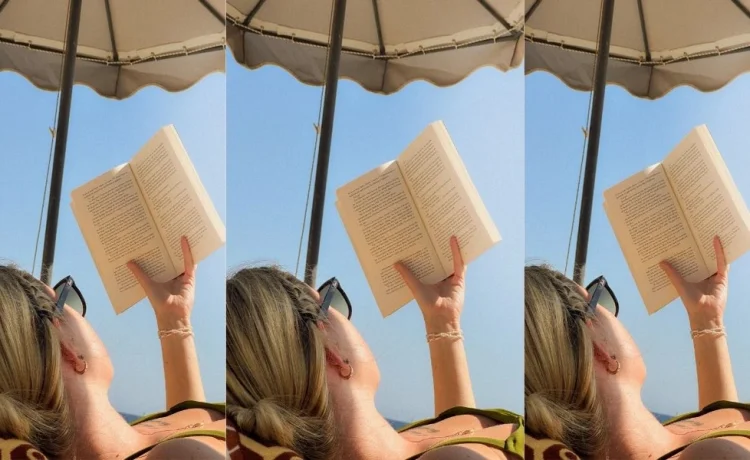

A beach read doesn’t have to be a guilty pleasure. The best ones are simply books that earn your full attention in an environment full of distractions – that make you forget the heat, miss the call for lunch, and resent having to put them down. The category is broader and better than its reputation suggests, and the right book for a vacation is the one you actually can’t stop reading, regardless of whether a literary prize committee would approve.
What Makes a Book Work on Vacation
The qualities that make a book ideal for travel reading are worth identifying before diving into specific titles. Narrative momentum is the most important – a book that pulls you forward, that makes you want to know what happens, that doesn’t require you to reconstruct the previous chapter every time you sit back down with sand between your toes. This can come from plot, from character, from voice, or from subject matter compelling enough that you’d read it anywhere.
Accessibility matters too, but not in the pejorative sense. A book that doesn’t demand intense concentration in order to yield its rewards is simply well-suited to a context where concentration is intermittent. Some of the best novels ever written are deeply accessible. Some of the most critically celebrated books require a sustained attention that beach conditions don’t reliably support.
Length is a practical consideration for longer trips. A Caribbean cruise spanning seven days or more creates a genuine reading window – sea days especially, when there’s nothing competing for attention except the horizon and the next meal. Bringing a book that’s too short means running out mid-trip; bringing several is the safer strategy.
Fiction That Delivers
Thrillers and suspense novels are the reliable workhorses of vacation reading, and the best of them are better than their genre reputation. Tana French’s Dublin Murder Squad series starts with In the Woods and maintains quality across six novels – each a standalone mystery with exceptional character writing and atmosphere. Any one of them would make an excellent trip companion.
Literary fiction with strong plots tends to travel well. A Gentleman in Moscow by Amor Towles is warm, witty, and compulsively readable – a novel about a Russian count under house arrest in a luxury hotel that manages to be about very large things while telling a very intimate story. The Nightingale by Kristin Hannah is emotionally demanding but narratively relentless; readers who start it on a flight frequently finish it before landing.
For readers who want their fiction to connect to the setting of their trip, Caribbean literature offers some of the most distinctive voices in contemporary fiction. The Brief Wondrous Life of Oscar Wao by Junot Díaz, set across the Dominican Republic and New Jersey, won the Pulitzer Prize and reads with an energy and originality that makes it feel unlike anything else. Derek Walcott’s poetry, for readers who want something more concentrated, captures the light and texture of the Caribbean in ways that prose rarely matches.
Nonfiction Worth the Bag Space
Narrative nonfiction – true stories told with the pacing and craft of fiction – often outperforms novels on vacation because the knowledge that it actually happened adds a dimension that makes the reading feel more substantial.
The Lost City of the Monkey God by Douglas Preston follows an expedition into the Honduran jungle in search of a legendary lost civilization. It’s propulsive, strange, and genuinely informative about both the archaeology and the ecosystem. Erik Larson’s books – The Devil in the White City, Dead Wake, Thunderstruck – are reliable choices for readers who haven’t encountered him; he applies thriller pacing to historical events with consistent success.
For something lighter, travel and food writing can set the mood for the trip itself. Bill Bryson’s In a Sunburned Country, about Australia, is one of the funnier books a person can read on a beach. Anthony Bourdain’s A Cook’s Tour follows his search for the perfect meal across a dozen countries and is entertaining, opinionated, and over too quickly.
The E-Reader Argument, Again
For a trip long enough to require multiple books, an e-reader removes the weight and volume problem entirely. The ability to carry a library in a device lighter than a single paperback, to start a new book the moment you finish one, and to adjust font size for bright outdoor light are practical advantages that add up over a week at sea.
If you’re a physical book person and the feel of paper matters to you, that’s a legitimate preference – bring two paperbacks and accept the tradeoff. If you’re agnostic about format, a loaded e-reader is simply the more practical tool for extended vacation reading.
One More Rule
Pick a book you’ve been meaning to read rather than one you feel you should read. Vacation is for books you actually want to open, not books you want to have read. The stack of improving literature that didn’t get touched is a familiar experience for most travelers. The book you couldn’t put down on the beach is the one you’ll remember.